Embodied intelligence / Human–agent interaction / Collaborative systems
01 / Selected work
Ideas, put into practice.
2026 / Embodied AI · Human–AI teamwork
TeamHab
A platform for embodied human–AI teamwork.
Two people, two robot agents, one shared environment
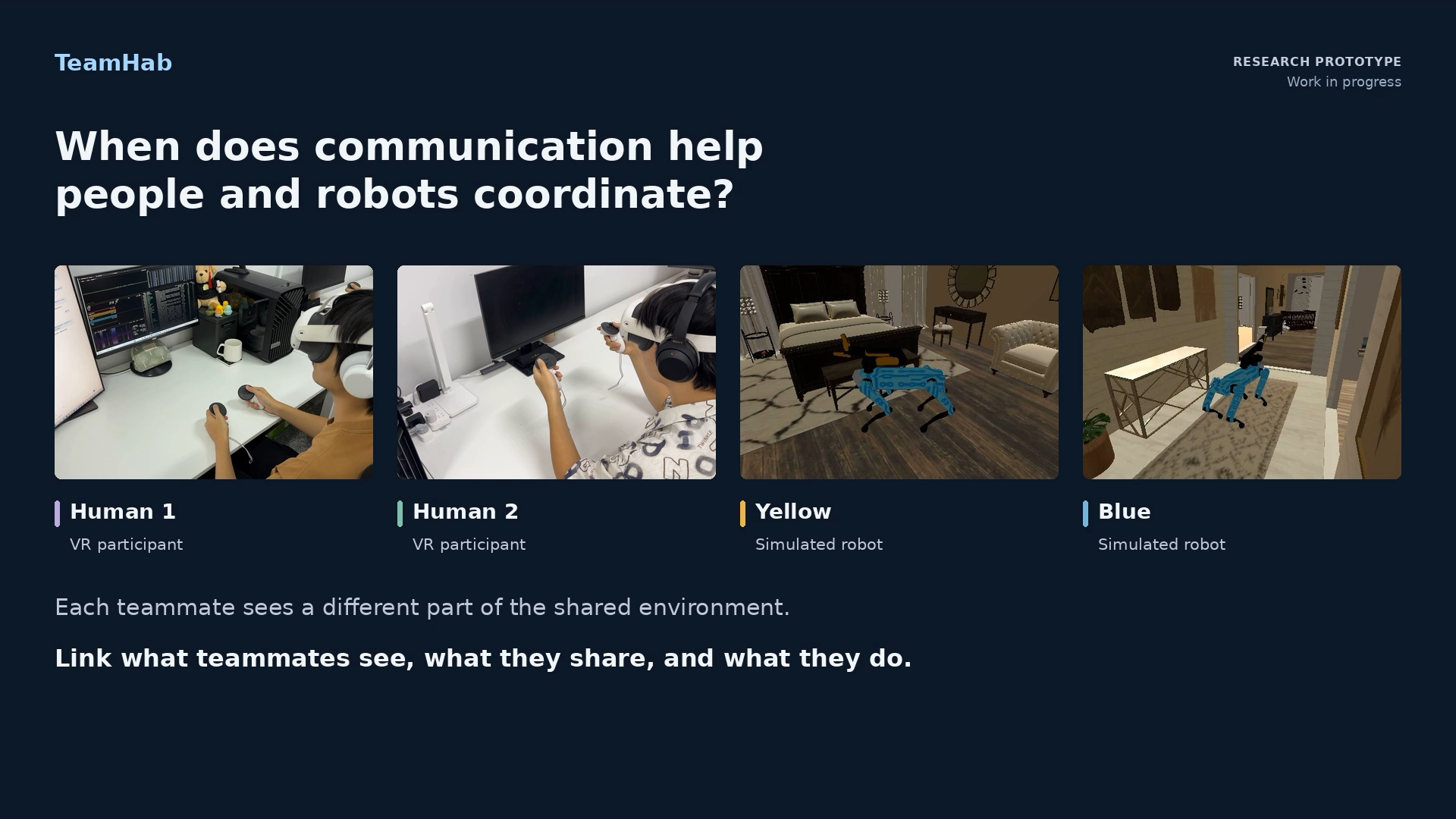
What does it take for people and robots to work as one team? TeamHab supports scalable teams of VR participants and AI-controlled robots working in shared Habitat environments. Robot planning and team communication are configurable, while views, messages, actions, and outcomes are recorded together. The demo follows a two-person, two-robot team as they coordinate and hand over parts of a task.
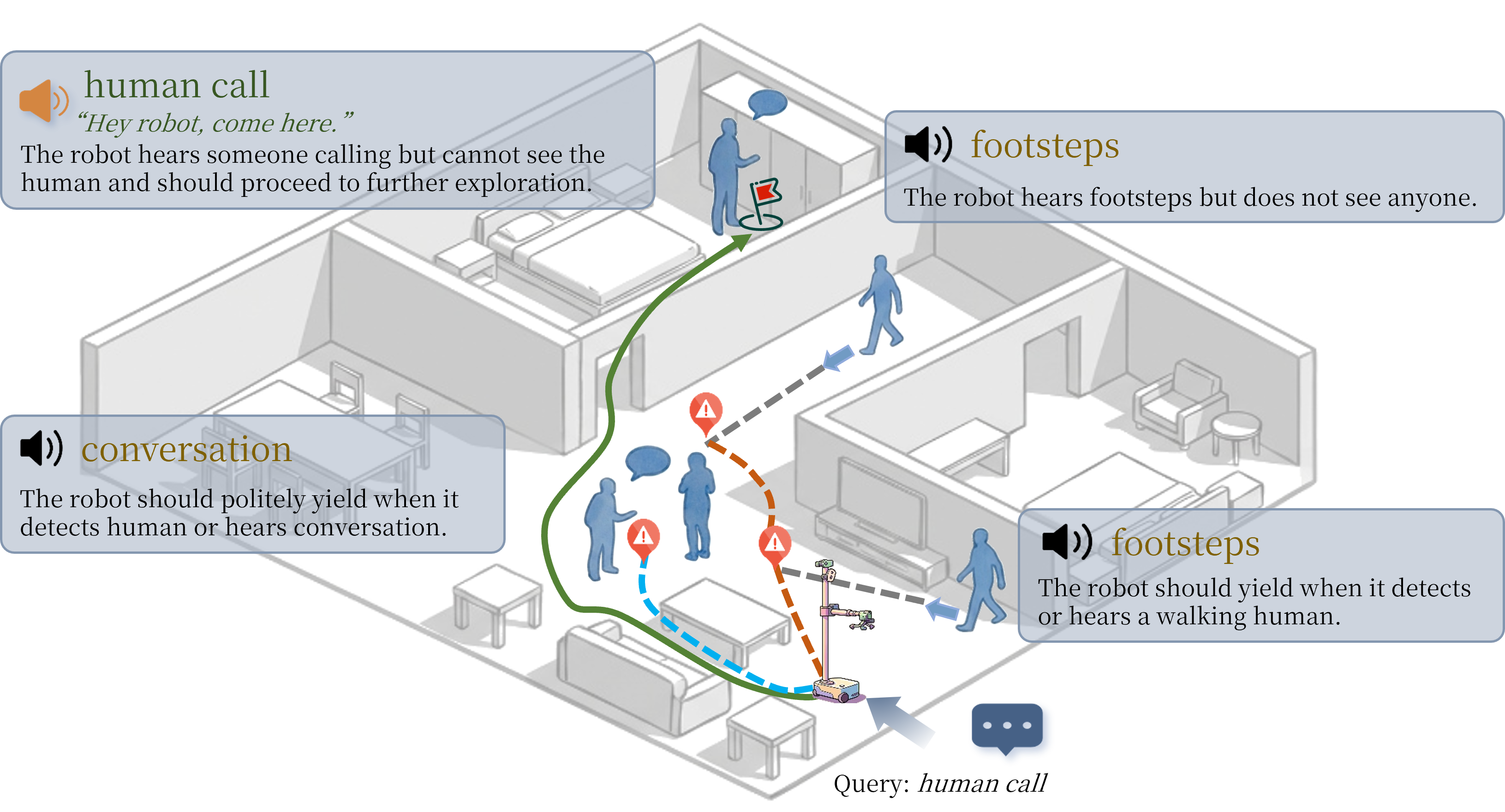
How can a robot make room for someone it cannot yet see? SAVNav turns sounds such as footsteps and conversation into spatial constraints. Its audio-visual map anticipates people beyond the robot’s line of sight, guiding active exploration and socially compliant navigation. The training-free framework is evaluated in Habitat and deployed on a physical Stretch 3 robot.
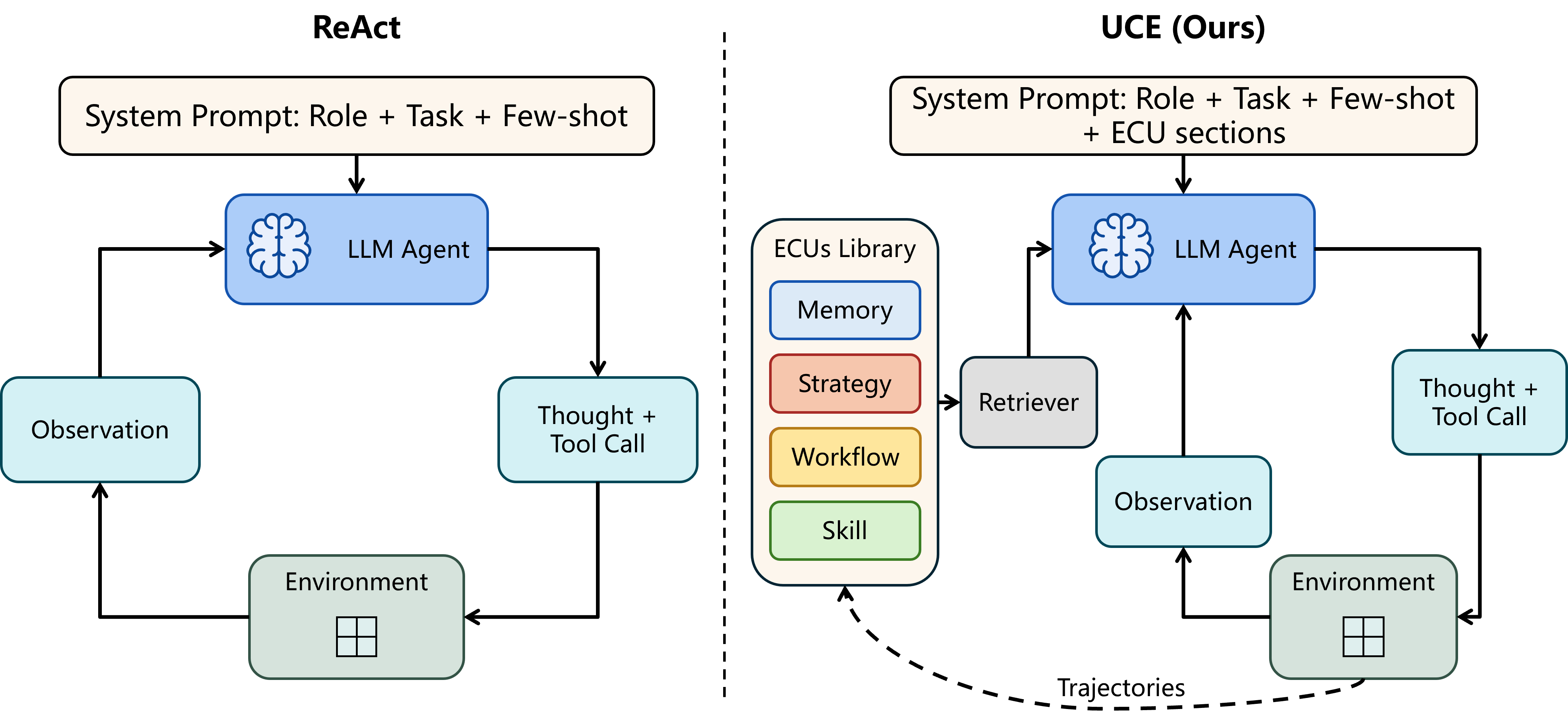
What should an agent carry from one task to the next? UCE organizes experience into an evolving library of memory, strategy, workflow, and skill. These context units are retrieved during decisions, evaluated through use, and refined over time. The framework improves performance on interactive tasks without retraining the underlying model.
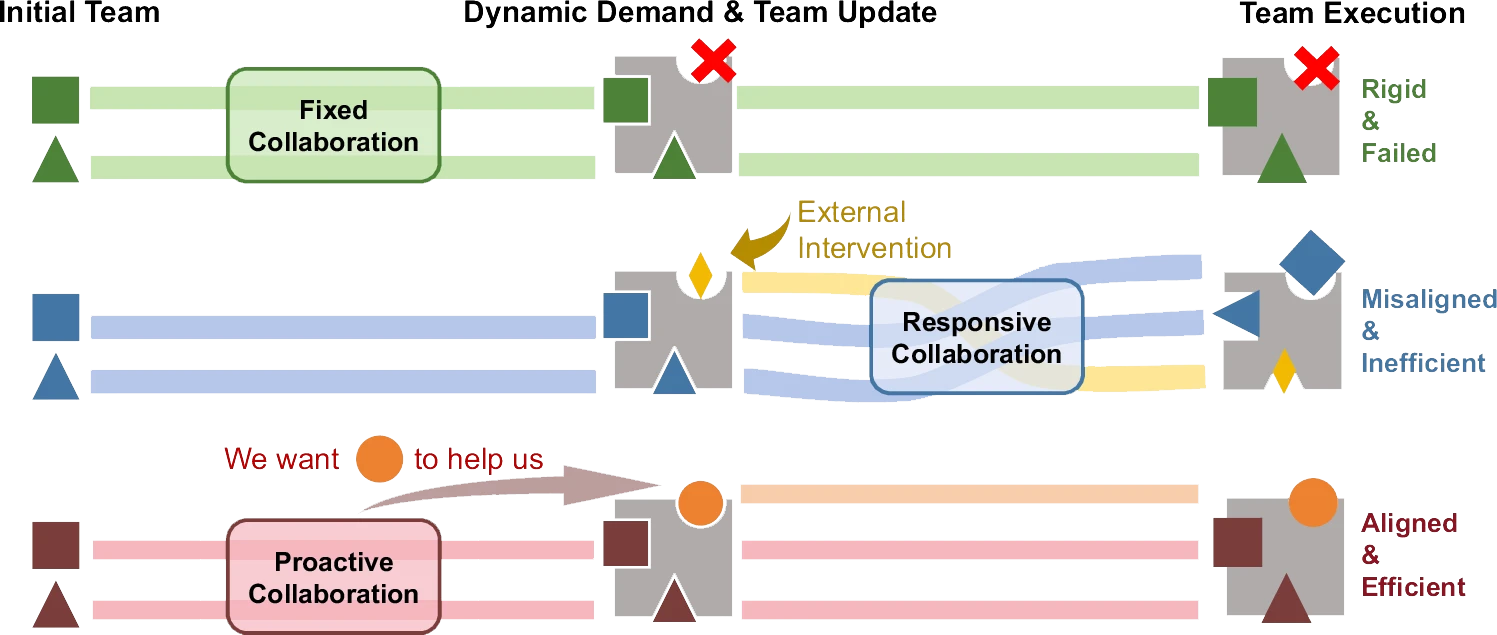
Can a robot team recognize when it needs a different set of teammates? This work studies proactive collaboration through autonomous interaction. Robots discuss task progress, negotiate responsibilities, and recruit or release members as needs change. Experiments in simulation and on physical robots explore how anticipating capability gaps can support more adaptive teamwork.
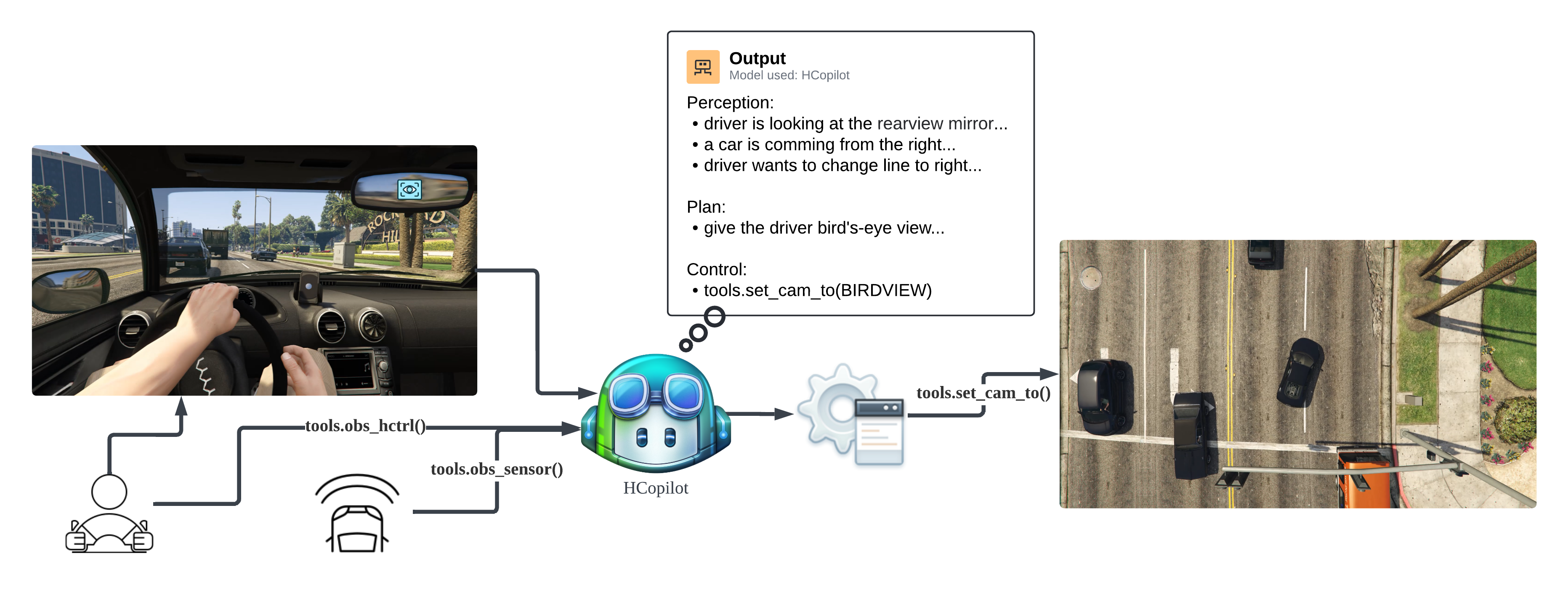
What does an AI copilot need to understand about the driver as well as the road? HCockpit brings together information from inside and outside a vehicle to explore context-aware coordination between people and agents.
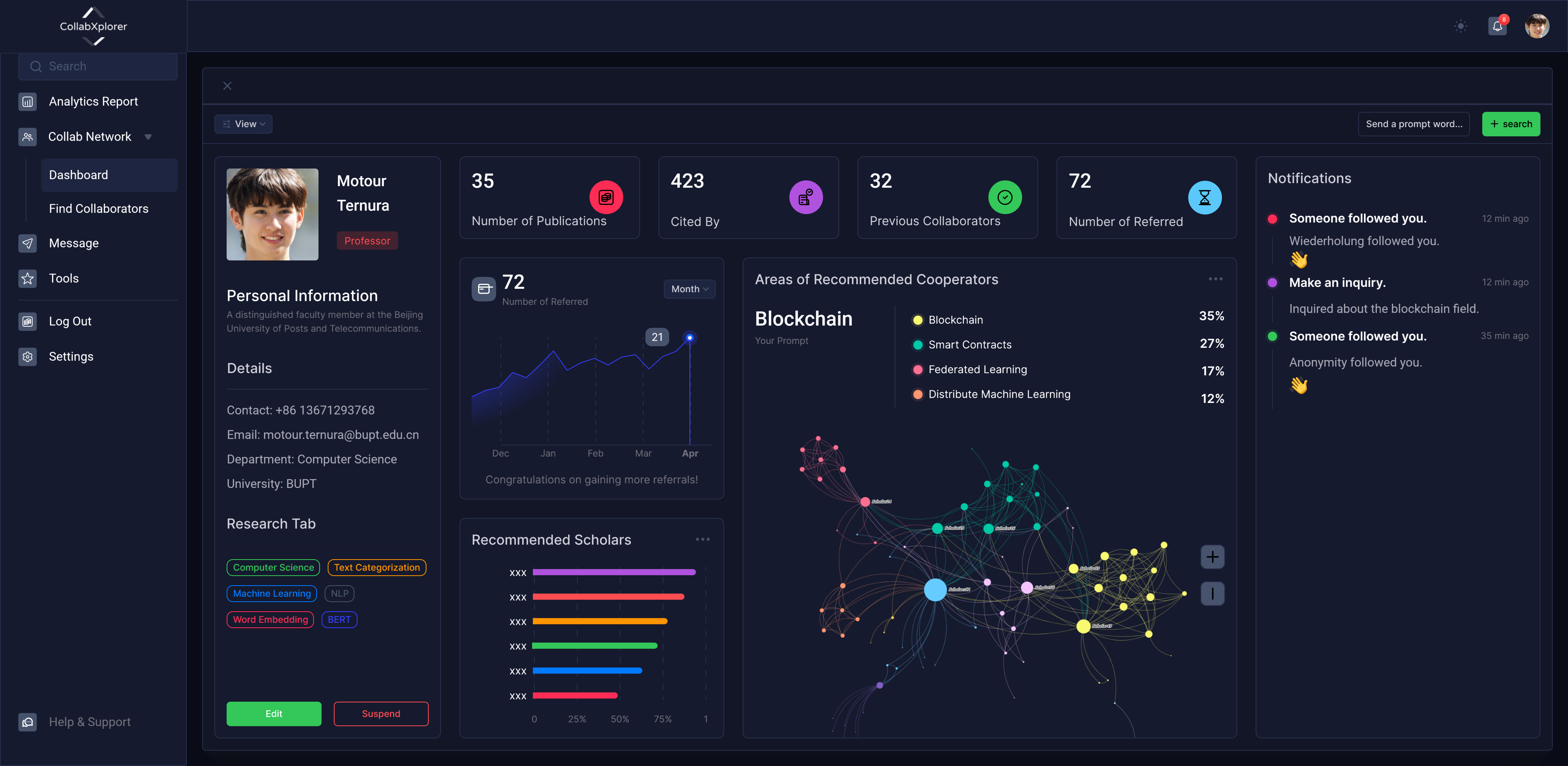
How might we find collaborators beyond familiar academic circles? CollabXplorer combines research semantics and scholarly networks to support the discovery of potential interdisciplinary collaborators.
My work has taken me from discovering connections between researchers to exploring collaboration between people, agents, and robots.
I’m interested in how perception and context can inform intelligent behavior—and how that behavior fits into people’s lives. These are questions I’m continuing to explore.